Why Engage Management Chose New Town for Newbury Flats
By Brett O'Daniell
When Brent Salter first visited New Town in 2021, he wasn't studying apartment floor plans or comparing rental rates. What caught his attention was something much simpler. On a Thursday evening, families were outside, kids were riding bikes and scooters, golf carts filled the streets, and neighbors were gathering around restaurants and volleyball courts.
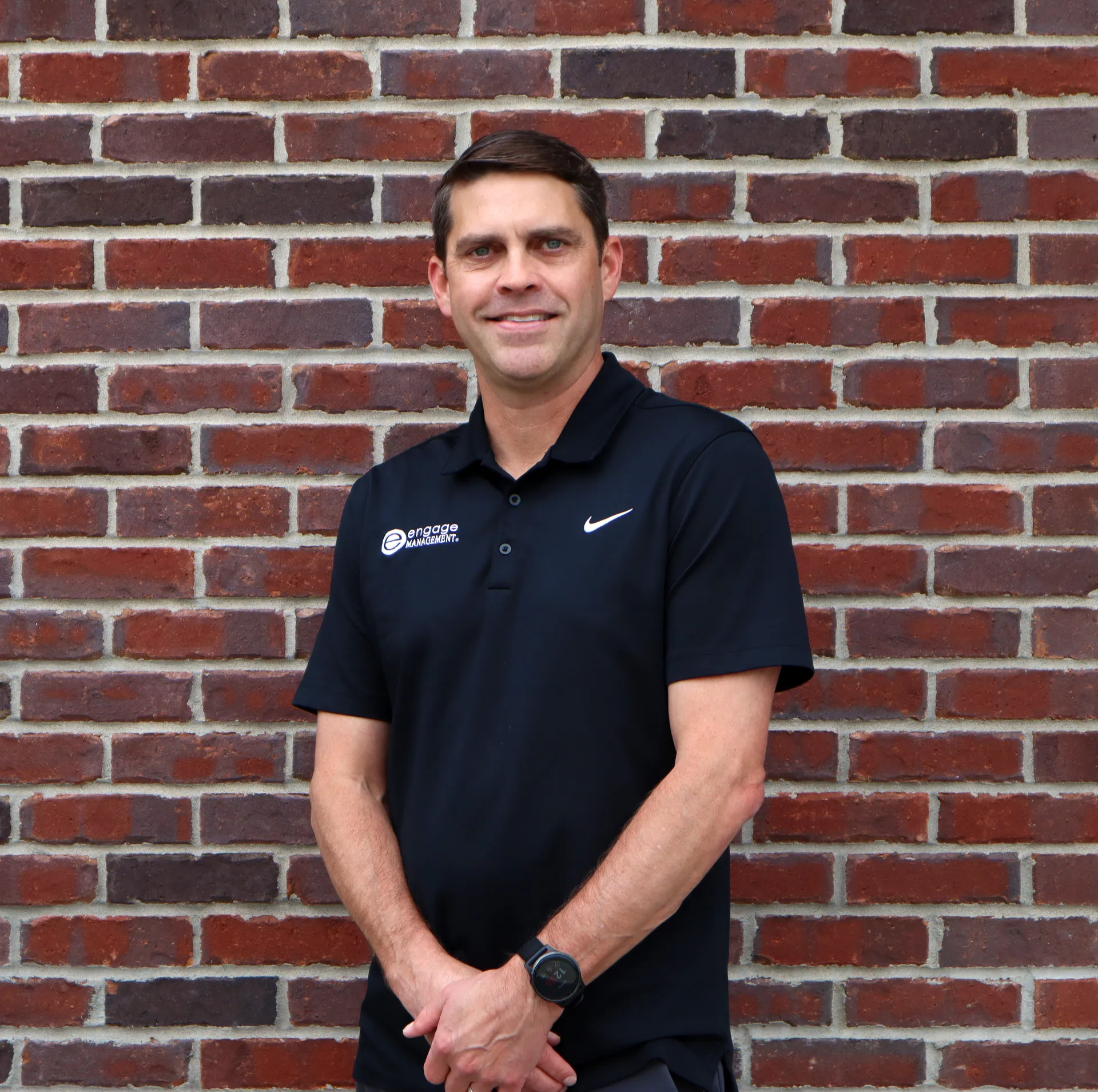
As President of Engage Management, he had traveled from Arkansas to see a community that fellow developers and planners kept talking about. For Salter, who has spent years developing and managing communities in many areas, it was immediately clear that New Town was different.
"I don't know if I've ever seen another traditional neighborhood development that is more active with young people and people actually living their life than New Town," he said.
That first visit eventually led to Newbury Flats, the first apartment complex in New Town and one of the most significant residential additions to the neighborhood in years. While many people see Newbury Flats simply as a new development, Salter sees it as something that has always belonged in New Town's original vision.
To understand why, it helps to understand where Brent and his company come from.
The Salter family has been in the construction and development business for decades. Brent's grandfather started a plumbing company in the late 1960s, and in 1976 his father, Gene Salter, founded Salter Construction. Today, the family business includes construction, development, brokerage, and property management, with multiple members of the Salter family working together under the same roof.
One thing that separates the Salters from many developers is their long-term mindset. That philosophy was one of the reasons New Town stood out. "We are inherently develop-and-hold people," Salter said. "We like to keep the asset after we've spent all the time and energy and blood, sweat, and tears building it."
In other words, they don't build projects simply to sell them. They build them, own them, manage them, and maintain them. The same company that develops a property is responsible for caring for it years later.
"We're cutting zero corners," Salter explained. "We build it like it's our own home because we're the ones responsible for taking care of it."
The road to New Town actually began through the New Urbanism movement. Over the past decade, Salter became active in the National Town Builders Association, a network of planners, architects, and developers focused on creating walkable, mixed-use neighborhoods where daily life happens close to home.
Through those relationships, he became familiar with DPZ, the planning firm behind New Town. One of Salter's other projects in Arkansas was designed by DPZ using similar principles, and he found himself increasingly drawn to communities that emphasized walkability, mixed-use development, and a strong sense of place.
Along the way, he also noticed a recurring challenge. Many traditional neighborhood developments excelled at single-family homes and town centers, but they struggled to provide housing options for every stage of life.
Young professionals often wanted to live in these communities but weren't ready to buy. Empty nesters wanted to downsize without leaving their neighborhood. Parents wanted to move closer to adult children. Families building a new home needed a temporary place to live during construction.
Developers often refer to this as the "missing middle"—housing types that bridge the gap between single-family homes and larger commercial developments.
His company's 2nd DPZ designed New Urbanist community apartment project was built in Habersham, South Carolina. After seeing its success, he began asking where else the concept might work. The answer came from Andrés Duany, one of the founders of DPZ, who suggested he visit New Town and meet developer Greg Whittaker.
The rest happened quickly. "We were hooked right then," Salter said.
What stood out wasn't just the design. It was the way people actually used the neighborhood. The streets were active. Families were outside. Kids had the freedom to ride their bikes through the community. People knew their neighbors.
For Salter, that activity represented the entire purpose behind traditional neighborhood development. "I think what Greg has been able to accomplish is remarkable," he said. "It's the people, it's the place, it's the interaction."
That belief became the foundation for Newbury Flats.
The development includes 108 apartment homes and is expected to house roughly 175 residents when fully occupied. The community offers one- and two-bedroom floor plans with upscale finishes, open-concept layouts, balconies, canal views, and modern design details. Yet when discussing amenities, Salter doesn't start with countertops or flooring.
"The neighborhood is the amenity," he said.
It's a statement that captures the entire philosophy behind the project.
Rather than creating a self-contained apartment complex with residents isolated from the surrounding community, Newbury Flats was designed to connect people directly into New Town itself. Residents are steps away from concerts, restaurants, volleyball leagues, farmers markets, walking trails, coffee shops, parks, and community events.
The early response has been encouraging. At the time of our interview, several buildings had already received occupancy approval and residents had begun moving in.
Salter said most early interest has come from young professionals who love the New Town lifestyle but aren't yet in a position to purchase a home. At the same time, he expects other groups to find value in the community as well.
Some residents may be families building homes in New Town who need a temporary place to live while construction is completed. Others may be parents or grandparents who want to be closer to family members already living in the neighborhood. Still others may be future homeowners using Newbury Flats as a way to experience the community before eventually purchasing a home.
In many ways, Newbury Flats expands the number of paths people can take to become part of New Town.
That idea aligns closely with Engage Management's mission of "engaging people and places." For Salter, apartments should be more than walls and a roof. He believes housing can create connections between people, neighborhoods, businesses, and communities.
"We're not just trying to provide a place to live," he said. "If we can get people engaged with the places they live, it makes the world a better place."
That philosophy is already shaping how Engage approaches New Town. The company plans to actively connect residents with local businesses, neighborhood events, and community organizations. The goal is not simply to fill apartments. The goal is to help residents become neighbors.
Like any significant addition to a community, Newbury Flats has sparked conversations. Questions about traffic, density, and change are natural whenever something new arrives. Salter understands those concerns, but points to similar projects where initial skepticism eventually gave way to acceptance.
His prediction for New Town is simple.
Five years from now, residents won't think much about the apartments at all. They'll simply notice a few more strollers on the sidewalks, a few more customers supporting local businesses, and a few more neighbors participating in community life.
In fact, he believes Newbury Flats may ultimately strengthen the community's housing market by introducing more people to New Town and creating future demand for homes throughout the neighborhood.
For a company that measures success in decades rather than years, that's exactly the outcome they're hoping for. After all, Brent Salter didn't come to New Town because he saw an empty piece of land. He came because he saw a community already working.
Now, through Newbury Flats, Engage Management hopes to become part of the next chapter of that story.